

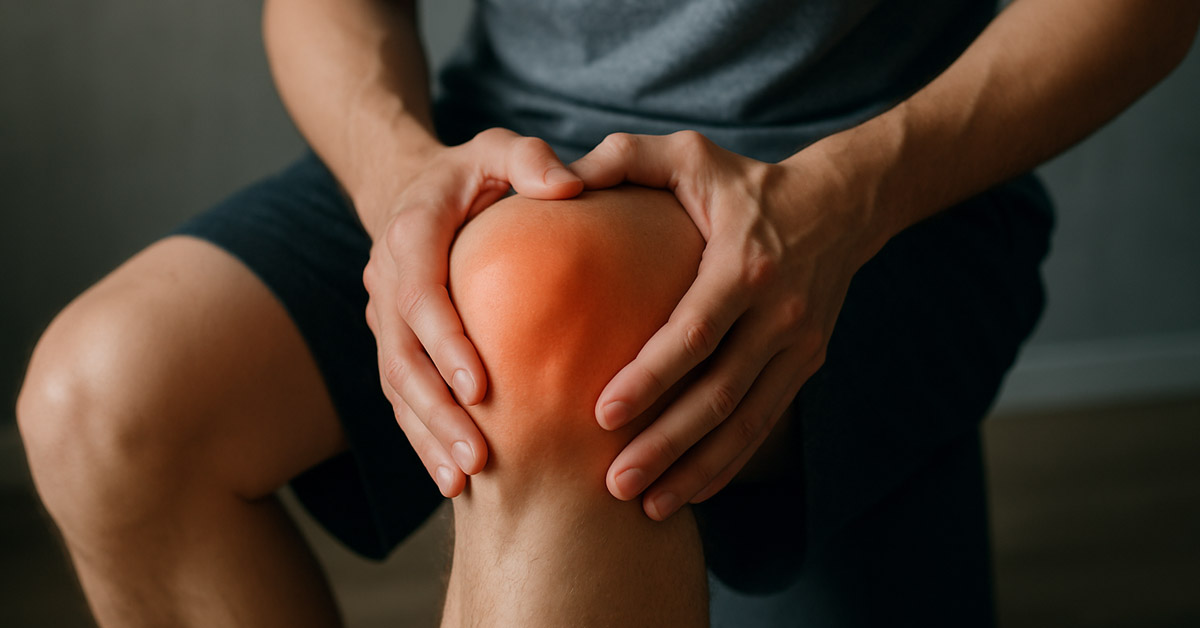
Knee discomfort after a torn ligament
A sprained knee ligament can occur after a twist, fall, sports injury or repetitive strain, and even when the injury is no longer acute, many people may experience discomfort, tension or some form of discomfort in the knee for a long time. The knee is a complex joint that constantly works to stabilise the body, so small changes or old tensions can cause sensations that affect both movement and well-being.
It's always important to get a medical assessment for long-term pain or injury so you know what's behind the symptoms. At the clinic, we meet people who are looking for support to calm the body, improve balance and relaxation - especially when unrest or tension in a joint affects their overall quality of life. Our work is not about diagnosing or treating injuries, but about creating the conditions for the body to find more peace and balance at its own pace.
Knee discomfort can cause a number of discomforts
Knee pain can cause a number of discomforts that affect both everyday life and the body's natural movements. Many people experience a feeling of restlessness, tension or “constricting” discomfort around the knee joint that can come and go throughout the day. The restlessness can make it difficult to calm down, especially when sitting still for long periods, lying in bed or trying to relax.
It can also lead to leg fatigue, soreness, stiffness or a desire to move your legs constantly to relieve the feeling. For some, it affects sleep and makes it harder to fall asleep at night.
Knee discomfort can have many causes - from muscle tension and overload to stress, poor posture or sedentary work. Whatever the cause, it can be bothersome and affect both comfort and wellbeing. If it persists, it's a good idea to seek professional advice and get your body back in balance.
Client story
“I had been experiencing discomfort in my knee for two years after a sprain. It wasn't severe pain, but it was constant and disturbed me both in everyday life and at night. After the sessions, I noticed that the anxiety started to decrease and the knee felt calmer and more stable. I had a very clear sense of my body relaxing in a way it hadn't done for a long time. In the time that followed, I felt less knee discomfort, slept better, felt more refreshed during the day and experienced a significant improvement in my quality of life. I don't know exactly what made the difference, but I could feel my body finding a new calm.”
Clients' experiences are always individual and reactions can vary from person to person. For some, it's about deep relaxation, for others it's about feeling more balanced, less anxiety or better sleep. Biophysical energy therapy works with the body's energy flow, state of tension and overall calm, and many describe it as an experience of grounding and inner balance. We do not diagnose or treat injuries or illnesses, and anyone with persistent pain or joint dysfunction should always consult a doctor or physiotherapist for a professional assessment. This approach can be a supplement for those who want support to calm the body, improve sleep, increase energy and wellbeing in everyday life.
Learn more by read about Jette Breitenstein
Read more about other interesting areas such as Reduce fat deposits or Overcome fatigue.